for many years, Iran has defined itself, to some extent, in opposition to my country, and indeed, we have a turbulent history between us. Such countries and their terrorist allies form an axis of evil that is accumulating weapons to threaten world peace.
Relations between Iran and the United States
have been mostly adversarial since the 1979 Islamic Revolution. There was no embassy here; it was a CIA center. It was a nest of spies where they were plotting against the Iranian people, but the seeds of animosity between the two countries were sown decades earlier.
In 1952, Time magazine named Iranian Prime Minister Mohammad Mosaddegh its Man of the Year for 1951, for his efforts to nationalize his country’s oil assets despite increasing economic pressure from Britain. Mosaddegh was Iran’s 35th prime minister, but his government
succeeded in doing what no other Iranian leader had done before. He acted against British interests in his country and deprived the navy of securing oil supplies. To understand how significant this chapter in Iran’s history is and how it shaped its future and its relations with the United States, we must go back
to the beginning of the century, when Iran was still known as Persia. Like many countries in the region, Iranian oil assets were overseen by foreign countries, since their discovery in 1901. The British government encouraged the entrepreneur William Knox D’Arcy to invest in the Persian oil fields.
The British brokered a deal between D’Arcy and the then Shah of Iran, Muzaffar al-Din. D’Arcy was granted a 60-year concession to explore, transport, and sell petroleum, natural gas, asphalt, and minerals in three-quarters of the country. Under this deal, the Shah received twenty thousand pounds in cash and an additional twenty thousand pounds in shares, with Iran receiving only sixteen percent of the profits. The D’Arcy Agreement is historically known as the deal that compromised Iran’s ability to profit from its own oil resources for decades. In 1908, a significant oil reserve was discovered in Masjed Soleyman in southwestern Iran. This was the world’s largest oil discovery at the time and sparked a wave of exploration that transformed the region’s future. Following this discovery, the British government acquired the D’Arcy Concession and the Anglo-Persian Oil Company, which later became British Petroleum Company, or BP, in 1954. Navies and national economies would increasingly run on oil, replacing coal. Iranian oil significantly aided the British Navy during World War I. Winston Churchill, who brokered the deal to acquire shares in the D’Arcy Concession, affirmed the importance of Iranian oil, stating that “fortune has bestowed upon us a gift from the fairy world, beyond our wildest dreams.” For the next 50 years, Iran’s vast oil reserves remained under British control, until Mossadegh came to power. After World War II, the rule of Shah Mohammad Reza Pahlavi was weakened by the growing nationalist voices in the Iranian parliament. In March 1951, Iranian Prime Minister Haj Ali Razmara, a staunch opponent of oil nationalization, was assassinated.
Immediately after the assassination, nationalists in the Iranian Majlis, or parliament, nominated Mossadegh as their new prime minister. Fearing the strength of the nationalist movement, the Shah was forced to approve Mossadegh’s nomination, and in May 1951, the Iranian parliament voted to nationalize the oil industry. Speaking on his victory, Mossadegh famously declared in a speech, “Our years of negotiations with foreign countries have yielded no results. With oil revenues, we can cover our entire budget and fight poverty, disease, and backwardness among our people.” The nationalization of Iranian oil was a blow to British economic interests and the very existence of the British Empire.
The scenes of the massive refinery at Abadan are sufficient proof in themselves of its size and importance. This great enterprise, built over many years with British skill and British money, was now being evacuated under humiliating circumstances. Britain took the matter to the International Court of Justice and imposed sanctions on Iran’s oil industry, making it impossible for Iran to sell its newly nationalized oil on the world market. The British hoped that the economic pressure would undermine Mossadegh’s popularity and force him from power, but Mossadegh remained defiant. Abroad, the eccentric statesman Dr. Mossadegh continued in his peculiar ways, rejecting every offer for a settlement of the oil dispute.
In an attempt to regain control of Iran’s oil industry, the British government approached the United States for help in plotting a coup. Harry Truman’s administration had rejected the idea of a coup against Mossadegh in 1952, but when Dwight Eisenhower came to power in 1953, the British managed to persuade him by warning him about Mossadegh’s alleged communist ties. Demonstrations and riots erupted in the streets of Tehran.
In that troubled country, radical leaders were rallying the people in favor of Dr. Mossadegh, with slogans of “Freedom from the Shah.” The initial plan to remove Mossadegh failed, but the British and Americans finally succeeded when they relied on royalist supporters, that is, supporters of the exiled Shah.
The country was divided between supporters of the Shah and supporters of Mosaddegh. Shah supporters, similarly, took to the streets of Tehran. The crowds demanded an investigation and set fire to newspapers. General Zahedi surrounded Mosaddegh’s house with tanks, and protesters clashed with his guards.
Mosaddegh and his cabinet eventually surrendered, and General Fazlollah Zahedi became the new Prime Minister of Iran. The US then restored Shah Mohammad Reza Pahlavi’s pro-Western regime to power. This was the first foreign intervention carried out by the newly formed CIA. This agency, with the help of the British MI6, overthrew the country’s first democratically elected government. This marked the beginning of events that have shaped Iran’s relationship with the US today.
At the military court in Tehran, where he was being tried for treason, the former Persian Prime Minister, Dr. Mosaddegh, showed that he knew how to make an entrance. Mosaddegh was sentenced to three years in prison, then kept under house arrest until his death. His family was forced to bury him on his own property.
The removal of Mosaddegh transformed Iran from a constitutional monarchy into an imperial dictatorship, sparking public animosity towards the US. In 2000, Secretary of State Madeleine Albright acknowledged for the first time the US role in the 1953 coup, but this coup was clearly a setback for Iran’s political development.
And now it’s easy to see why many Iranians are resentful of this US intervention in their internal affairs. After the 1953 coup, oil once again came under British control, and the US continued to support the Shah of Iran.
In 2013, the Iranian parliament passed a bill authorizing the government to sue the US for its involvement in the coup. This bill came after the release of classified documents detailing how the CIA orchestrated a coup as part of US foreign policy. The campaign to install a pro-Western government in Iran targeted Prime Minister Mossadegh and his government.
With the goal of overthrowing Mossadegh’s government through legal or quasi-legal means and establishing a pro-Western government under the Shah with Zahedi as Prime Minister in 1957, the US government helped the Shah establish his notorious secret police force, known as SAVAK. SAVAK was tasked with monitoring the Shah’s political opponents and even Iranians living abroad. This agency tortured many Iranians, and its agents received training from the CIA in interrogation techniques, but the alliance between the Shah and the US ignored the growing anger on the Iranian streets against the Shah’s repression and American interference. In late December 1977, during a lavish New Year’s Eve celebration, US President Jimmy Carter praised the Shah, saying he had made his country an island of stability. Iran, thanks to the Shah’s great leadership, was an island of stability in one of the world’s most turbulent regions. Just over a year later, the animosity towards the Shah and US policies culminated in the Shah’s removal from power. Religious leader Ayatollah Khomeini, who played a crucial role in the Shah’s overthrow, returned to the country after 15 years of exile.
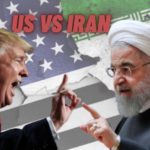
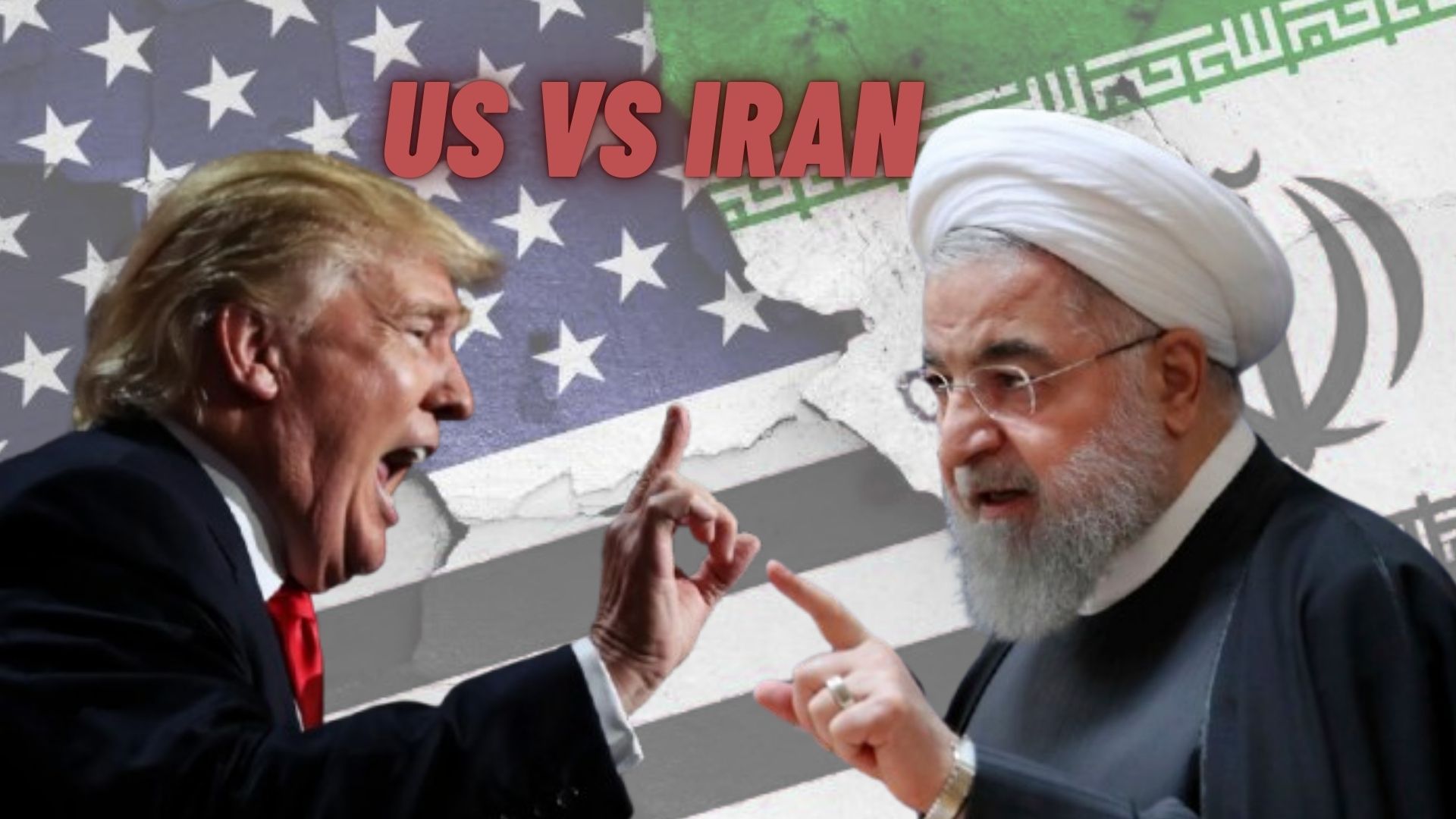
His return marked the beginning of more than four decades of animosity between Iran and the United States. Since 1984, the US has designated Iran as a state sponsor of terrorism, and although there have been periods of negotiation and de-escalation, changes in administration and Iran’s proxy wars throughout the region have once again brought the two countries into direct confrontation. Tensions between Tehran and Washington have been escalating since the Trump administration withdrew from the Iran nuclear deal in 2018. For a very long time, precisely since 1979, countries have tolerated Iran’s destructive and destabilizing behavior in the Middle East and beyond. Those days are now over. The United States has taken several steps to exert maximum pressure on the Iranian regime. This campaign aimed to cripple Iran’s economy and thereby halt its nuclear program and regional expansion. Iran responded to the maximum pressure campaign with a campaign of maximum resistance. In retaliation, Iran demonstrated its capacity to harm American interests in the region.
In January 2020, the United States assassinated Qassem Soleimani, Iran’s most revered military commander. Soleimani was the head of the Quds Force of Iran’s Revolutionary Guard. His controversial role in the Syrian war had expanded Iran’s military presence in the region. President Hassan Rouhani drew parallels between Soleimani’s assassination and the 1953 US-backed coup. He stated that this crime committed by the US was similar to the bizarre attempt and the downing of the Airbus passenger flight in the Persian Gulf. This crime will never be forgotten.
Trump claimed that by killing Soleimani, the US saved many lives, but for many of these mourners, Soleimani was another national hero, much like Mossadegh, whom the US removed from power against the will of the Iranian people.
TO BE CONTINUED………..