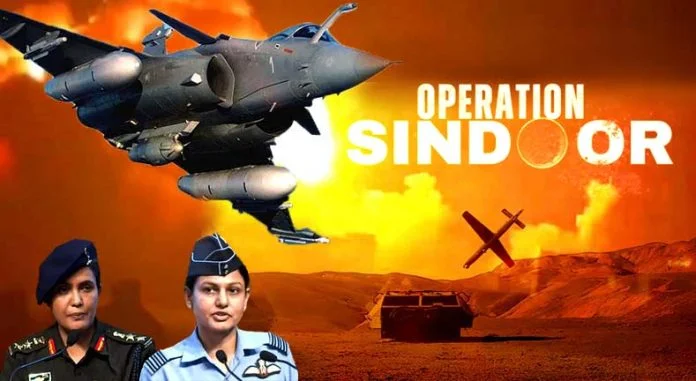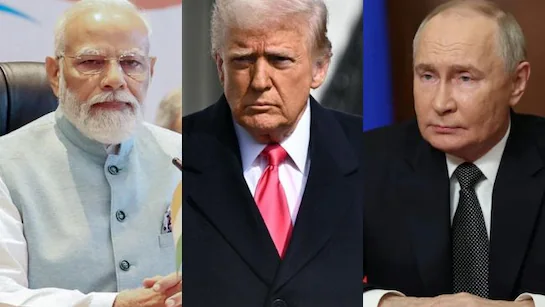
When India and Pakistan were carrying out heavy air attacks on each other, the US President drew all the attention towards himself by announcing a ceasefire. In the last thirty years, it is the US intervention that has often stopped small and big wars between India and Pakistan. Usually, these diplomatic efforts happen behind the scenes, but this time the deal-breaker US President made them public. I said, come on, we do a lot of business with you. Stop this conflict. If you stop this, we will do business. If you don’t stop, we will not do any business. And suddenly they said, we are going to stop. And they stopped. And they did this for many reasons, but business is the biggest reason. We will do a lot of business with Pakistan. We will do a lot of business with India. We are currently negotiating a deal with India. Soon such talks will take place with Pakistan as well. And we have also stopped a nuclear conflict. I think that would have been a very bad nuclear war. Millions of people would have died, that’s why I am proud of this decision. India has always insisted on a bilateral solution to the Kashmir dispute. Some experts say that the US President’s intervention has now complicated the matter for India. After the US intervention, Pakistan Prime Minister Shahbaz Sharif publicly acknowledged it and also thanked Trump. He thanked Secretary of State Rubio, who is also the NSA. That means the US is back in the game. From India’s point of view, this was not needed. So, I think it was bittersweet for India. Bhaskar also feels that the sudden switch from Operation Sindoor to ceasefire will also affect the image of Indian Prime Minister Narendra Modi. India thought it would be very easy and that it would create an image of Prime Minister Narendra Modi as a strong-willed leader who knows how to conduct operations and send messages. But today, in my estimation, he is on the backfoot. India is the fifth largest economy in the world. On the other hand, Pakistan’s economy is not even 10 percent of India’s. Some experts believe that Operation Sindoor has brought Islamabad closer to Beijing. 81 percent of the equipment of the Pakistani army is of Chinese origin and they have a role in instigating the India-Pakistan dispute. China was also giving very aggressive signals to India during the dispute. China supplied a lot of weapons and their nature is very aggressive. In recent years, India has been presenting itself as a representative of the Global South on the international stage. India, which will chair the G20 in 2023, had then given the slogan of Vasudhaiva Kutumbakam. But now in world politics, its relations with Pakistan are in focus. According to strategic policy expert Bhaskar, India also needs to look within itself honestly. I think the problem of Pakistan and terrorism is not over. It has not ended in the way India had hoped. This is a very complex challenge. Secondly, there were technical deficiencies, due to which Pahalgam happened. I have said earlier that there are deficiencies in the intelligence system, these should be reviewed properly. Thirdly, our military preparedness will have to be reviewed again, that too in a very impartial manner. After the Pahalgam attack, India suspended the Indus Water Treaty. And this decision is still in force. Water and blood cannot flow together. Pakistan has claimed that tampering with the flow of water is a declaration of war. On the other hand, India has given a statement that future terrorist attacks are a declaration of war. In such equations, both the countries still have blind turns of conflict ahead.
India-Pak Ceasefire, How will Operation Sindoor affect in the future?